Anabelle Colaco
05 Jun 2026, 11:45 GMT+10
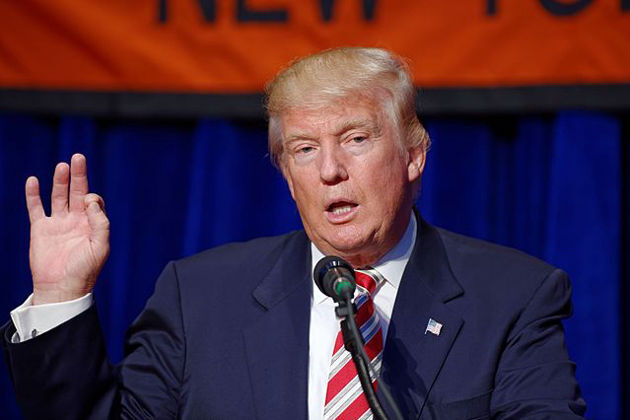
WASHINGTON, D.C.: The Trump administration has proposed new tariffs of 10 percent or more on imports from dozens of major U.S. trading partners following an investigation into goods allegedly produced using forced labor.
The proposed duties, announced by the Office of the U.S. Trade Representative (USTR), would apply to a wide range of countries and regions. Canada, Mexico, the European Union, Taiwan, and the United Kingdom would face 10 percent tariffs, while countries including China, Japan, India, South Korea, and Switzerland would be subject to 12.5 percent levies.
The move is part of President Donald Trump's broader effort to maintain tariff revenues after courts struck down several of his earlier global tariff measures.
"The failure of our most important trading partners to address the importation of goods made with forced labor is unacceptable," U.S. Trade Representative Jamieson Greer said in a statement. "This creates a dynamic where American workers are forced to compete globally on an unlevel playing field."
He added that "each of our trading partners must do more to ensure that trade does not perversely encourage and entrench forced labor globally."
Greer's office said the failure to block such imports is "unreasonable and burdens or restricts U.S. commerce."
The tariffs would be paid by U.S. importers, who often pass higher costs on to consumers. To limit the impact on prices, the administration proposed exemptions for a broad range of products, including aircraft parts, food items such as coffee and beef, and rare earth minerals used in smartphones, electric vehicles, and other technologies.
The measures would not take effect immediately. Public hearings are scheduled to begin July 7, and the proposal remains subject to review and public comment.
China quickly rejected the allegations. "There is no such thing as forced labor in China, and we oppose using it as an excuse to engage in political manipulation," Chinese Foreign Ministry spokesperson Mao Ning said.
The proposal marks the latest chapter in the administration's effort to build tariff barriers around the U.S. economy despite a series of legal setbacks.
Earlier this year, the U.S. Supreme Court ruled that Trump exceeded his authority when he invoked the International Emergency Economic Powers Act to impose broad tariffs on nearly all of his trading partners. Additional temporary tariffs imposed afterward are also facing legal challenges, though the government continues to collect them while court proceedings are ongoing.
Tariff revenues, which had become an important source of federal income following Trump's 2025 tax cuts, have declined since those rulings. Treasury Department data show collections peaked at more than $31 billion last October, then fell to $22 billion in March and April.
To replace that revenue, the administration has turned to Section 301 of the Trade Act of 1974, which permits tariffs against countries found to engage in unfair trade practices. Trump previously used the same authority to impose tariffs on China during his first term.
"What's somewhat brilliant about this way of approaching 301 is that politically it's very hard to argue that you shouldn't go after forced labor and force countries to enforce forced labor laws on the books," said trade lawyer Ryan Majerus, a former U.S. trade official.
The USTR report cited estimates from the International Labour Organization showing that 27.6 million people were engaged in forced labor in 2021. It identified products, including rice from Myanmar, tobacco from Malawi, beef from Brazil, and cotton and polysilicon from China, as sectors vulnerable to forced labor risks.
Critics, however, accused the administration of invoking labor concerns as a legal justification to restore tariffs that courts had already rejected.
"Accusing the EU of not doing enough against forced labor is absurd," said Bernd Lange, chair of the European Parliament's trade committee. "The EU has adopted the world's most stringent rules against products made with forced labor. This looks very much like trying to make the facts fit a legal justification for tariffs that has already been decided."
Get a daily dose of Dutch Sun news through our daily email, its complimentary and keeps you fully up to date with world and business news as well.
Publish news of your business, community or sports group, personnel appointments, major event and more by submitting a news release to Dutch Sun.
More InformationDUBAI/BEIRUT: The Iran-backed Hezbollah group rejected a new ceasefire in Lebanon on June 4, while Israel said it would not pull its...
DUBLIN, Ireland: Children as young as seven are being targeted by criminal gangs in parts of Ireland and trained to carry drugs and...
WASHINGTON, D.C.: The Trump administration this week imposed sanctions on Iran's largest digital asset exchange and three other cryptocurrency...
TOKYO, Japan: Severe tropical storm Jangmi hit Japan on June 3, bringing strong winds and heavy rain that disrupted transport and businesses...
BELFAST, Northern Ireland: A man who pretended to be live-streaming a video game on YouTube to create an alibi while he killed his...
KHARTOUM, Sudan: The United Nations says sexual violence has become one of the main features of the war in Sudan, which is now in its...
GENEVA, Switzerland: Global health organization CEPI has committed roughly $60 million to accelerate the development of vaccines against...
BUDAPEST, Hungary: Hungarian Prime Minister Peter Magyar said on June 1, after meeting President Tamas Sulyok, that if the president...
BECOV NAD TEPLOU, Czech Republic: A collection of wine from the late 19th century, which had been hidden for many years under the floor...
NEW YORK CITY, New York: Oil prices surged by about $5 a barrel on June 1 as fears of further disruptions to global energy supplies...
DUBLIN, Ireland: The Government plans to move ahead with proposals to remove the triple lock system that controls overseas deployment...
NEW YORK CITY, New York: Meta's effort to train artificial intelligence systems using detailed records of employee computer activity...